Skip to content
We will be closed Friday, June 19 in observance of the Juneteenth National Holiday

Store hours: 9:30-4:30 Monday-Saturday

Help Center

Clay Terms

texture/workability/the feel of clay - different clay bodies have different "personalities" one might say, based entirely on the natural properties of their ingredients.  

  • plasticity - this refers to how far you can push a clay - how much it bends before it breaks you might say.  some ingredients have very low plasticity and then there's ball clay, which is named somewhat for literally the fact that it sticks together into a ball so easily (highly plastic) 
  • short - when someone says a clay body is short, it means it lacks plasticity.  If you roll out a coil of clay and wrap it around your finger and it breaks, it's short!  
  • toothy - this refers to clay bodies usually with a lot of fireclay or just something that gives it more structure.  not quite the way adding grog will do, just that feeling that they clay itself has some toughness (typical of a stoneware body)
  • thixotropic- that's a fun one to say.  It describes (usually a porcelain) a clay that becomes VERY stiff as it ages...almost makes you think it's unusable, but then softens up and responds nicely once you start to work with it.  

technical details - it's the math and science of art!!! these are all of the testing and measurements that we do on a clay.  This information can be very useful  to consider among the many other concerns when selecting the right clay for your purposes.

  • shrinkage - as the water evaporates from the clay and the remaining particles tighten, it shrinks.  this is wet to dry shrinkage.  in the bisque firing, the chemically bound waters and lots of other organics burn out and it shrinks a bit more.  Then again if your glaze firing is hotter than your bisque, it will shrink yet again.  Typically the OVERALL shrinkage of clay is 12%, so if you make a 10" cylinder, after firing it will be 8.8" tall.  
  • absorption - this is the measurement of how much water a completely unglazed clay body will hold after its final firing. There are many strong opinions about how much absorption a clay body should have at maturity. 
  • porosity - this is a measurement of how open the body is, or literally how many pores it has.  It differs from absorption whenever there are fully closed pores encapsulated within the clay body.  For more thorough and technical explanation, check out Tony Hansen's Digital Fire Database article on porosity

stages of clay dryness: (check out Bill Bracker's explanation of the firing cycle)

  • Greenware - freshly made works for clay that have not yet been fired.
  • Leather hard - when clay has dried out just a bit and has the feeling/stiffness of supple leather.  
  • Bone dry - fully dried of all its physical water and ready to fire. 
  • Bisque - Clay that has been through an initial firing to complete the chemical change. 

types of clay -

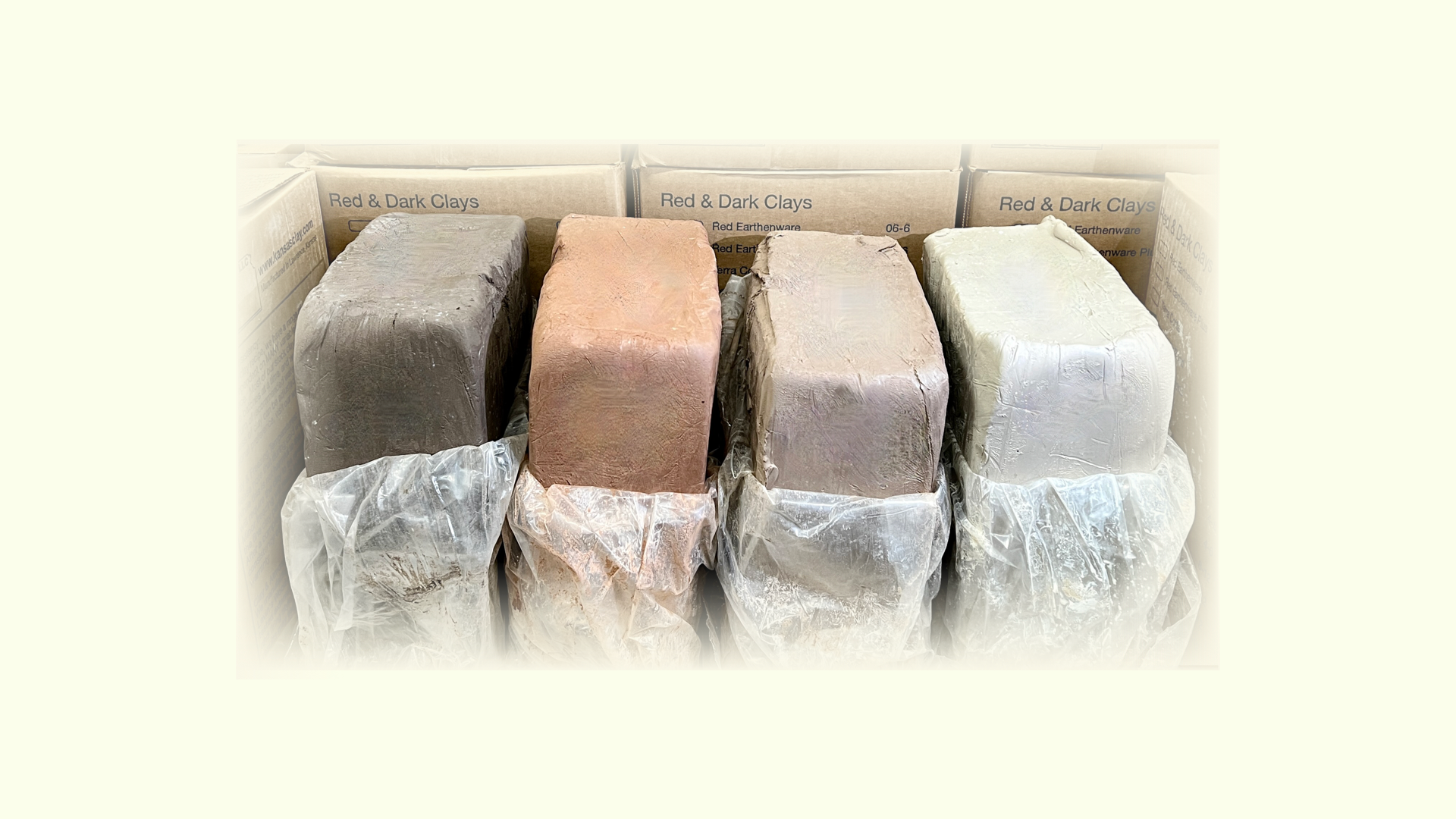
  • Earthenware - a low-fire clay body typically fired between cone 06-02. While mature at these cones, earthenware bodies do not fully vitrify, and require a glaze or post-fire sealant to be water tight.
  • Stoneware - clay bodies that mature at mid-to-high fire (cone 4-12) depending on the specific recipe. These have excellent working properties due to their inclusion of Fireclay or Ball clay.
  • Porcelain - Kaolin-based clay bodies that are typically mid-to-high fire; cone 5-12 depending on the specific clay. These bodies fire off-white to white, and have a very fine particle size. They tend to be less plastic than Stoneware and Earthenware bodies.
  • Porcelaneous Stoneware - Typically mature at mid-to-high fire (cone 4-12 depending on recipe). These are a hybrid clay made up of a significant amount of Kaolin, as well as additions of Ball, Stoneware, or Fireclay.

Glaze Terms

The three basic parts to every glaze

  • flux - Determines when the glaze melts/matures
  • glass former - this is either silica, flint or quartz. In the USA, we use these terms synonymously. The percentage of glass former determines how glossy the surface is, more siilca = gloss, less silica = refractory (satin/matte)
  • colorant - all of the oxides and carbonates (cobalt, iron, copper etc) blended in a variety of percentages. Could also be mason stains!

Additional ingredients lend different properties to glazes.

Characteristics

  • stiff - glazes that do not run, even when fired vertically
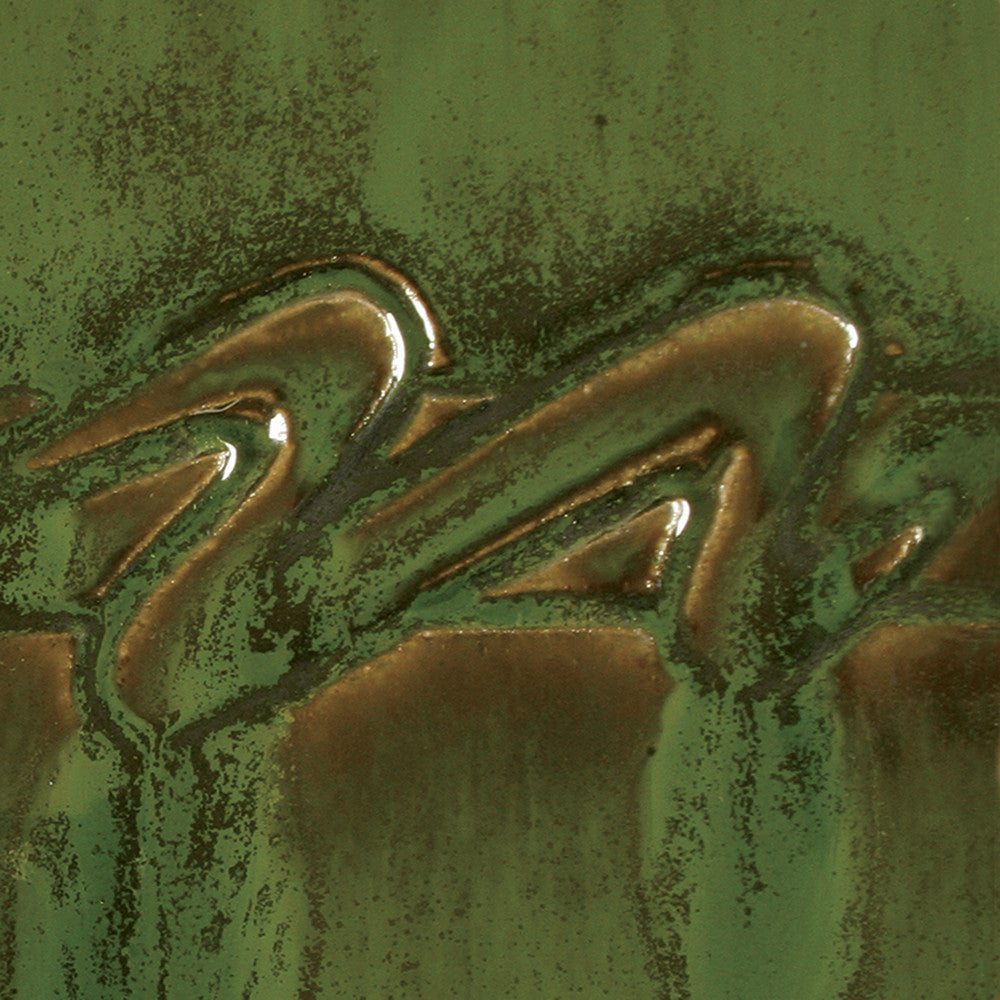
  • flowing - glazes that flow more during the firing process and create runny, blended effects
  • "breaking" - glazes that show different colors or textures especially when applied over texture
  • translucent - color that is sheer and shows off what is on the surface of the clay
  • opaque - color that you can not see through.
  • gloss/satin/matte - the shininess of the finished glaze. Some manufacturers use satin and matte interchangeably.
  • Dinnerware Safe/Food Safe - “Dinnerware Safe” indicates the fired glaze surface meets the FDA guidelines for food safe, and the fired surface is free of surface texture that could potentially trap bacteria, and the fired surface is chemically durable. “Food Safe” is a regulation and is defined by the Compliance Policy Guide, which is maintained by the FDA and only applies to lead and cadmium release.
  • AP Non Toxic - refers to the raw state of the glaze and clarifies that there are no ingredients in the glaze that are harmful if consumed.

Other decorating /color producing products (aka glaze cousins)

  • stain - a fritted combination of several materials to create a stable color in powdered form. Can be used in a variety of ways. See our page on Mason Stains
  • engobe/slip - a liquidy mixture of chemicals with a high clay content that is often used to change the surface color of clay, such as a white engobe or slip that is applied to leather hard red clay for either sgraffito technique or simple to allow for better color results with underglazes
  • Terra Sigillata - a refined slip that uses only the finest particles of clay, usually used in combination with burnishing to provide a beautiful sheen to fired ware
  • Underglaze - another liquid colorant that is usually available in a rainbow of colors. Underglazes are also very versatile in application (can be used on leather hard or bone dry greenware or on bisque); temperature (most underglazes are stable up to cone 10); and preparation (underglazes can also be formulated as watercolor, chalk, pencil and marker)

Defects: Check out this great blog article on common defects written by Haley Stanaford. For detailed information, check out the Glaze Defects and Adjustments PDF we have available for download

  • Crazing - little cracks on the surface of the glaze usually resulting from glaze to clay body fit mismatch
  • Shivering - glaze that just falls off the surface of the clay, also due to fit problems
  • Crawling - when the glaze beads up leaving a bare spot of clay, usually due to dirty bisque
  • Pinholing - tiny holes in the surface of the glaze left behind by gasses escaping from the clay body through the glaze, most commonly caused by underfired bisque or glaze firing too fast

Kilns & Firing Terms

Cone - both a physical thing AND a measurement level.  Cones are the combination of a variety of ceramic materials that have been carefully combined and pressed together into a cone shape.  As heat is applied to them over a period of time, the materials in the cone begin to melt and the cone then bends.  This gives the person firing the kiln a visual cue for when the pieces are mature.  We also use cone to denote the firing temperature (or range) of a clay or glaze. 

Bisque - a very slow-firing profile that provides extra time at the beginning of the firing to allow for all of the free water and chemically-bound water to evaporate from the clay. For more information, click here to view "Bill Bracker's explanation of the firing cycle"  typically Cone 05-03 for electric fired ceramics.  Raku, Gas or wood firie bisque is typically around 012-08

Glaze - the second firing of a ceramic piece.  Earthenware glazes are typically fired to cone 05.  Stoneware and porcelain glazes can be cone 4-6 in an electric kiln or 8-12 in gas or wood kilns.  Raku Firing typically does not use cones, rather the glazes are fired to visual maturity

Lustre/Decal/018 - typically a third firing in which lustres, decals or china paints are applied to a glazed surface and then fired at a very low temperature of 020-016

Oxidation - typically synonymous with electric kiln firings.  Oxygen is present throughout the firing.

Reduction - a process in gas/wood firing in which the volume of flame introduced to the firing chamber exceeds the available oxygen.  In an attempt to continue combustion, oxygen molecules are transferred from the glaze or clay body itself. This reduction of oxygen transforms glazes significantly at the chemical level (for instance, RED IRON OXIDE has a chemical formula of FE2O3 (2 iron molecules bond with 3 oxygen molecules).  In a reduction atmosphere, the combustion process "steals" the oxygen from the FE2O3 and reduces it to its minimum bond, FeO (one iron and one oxygen).  This material is BLACK.)

Slow Cool / Fire Down - some glazes require a controlled cooling environment, usually for the growth of crystals in the glaze.  Other glazes just benefit from being allowed to cool more slowly.  With comptuer controllers on kilns it is now much easier to program your kiln to continue to run the elements intermittently to minimize temperature drop, usually during the first 500ºF

Furniture - 

  • shelves
  • posts
  • stilts
  • kiln wash

Thermal Shock

Vitrification

glow test - one of the first steps in diagnosing possible kiln problems.  This is described in detail on Dave's old tech tip "shining a light on the glow test"


Bracker's Good Earth Clays

We are here to help! We have a huge showroom full of products and pottery to peruse, or shop our online store 24/7. We also offer a variety of services ranging from custom firinging, glaze mixing, repair and consulting.

Our Phone number

Our Retail Hours

Mon – Sat, 9:30am-4:30pm


Contact Us
I just placed an order, how soon will it ship?
  • about 90% of orders that go out “small package” (UPS, FedEx or Priority Mail) will get packed up and ready for shipment the same business day, if we get it before about 1pm or the next business day if after that.  Please note, our Mail pickup usually happens at around noon, sometimes earlier, sometimes later.  It’s quite unpredictable so there is often a delay in priority mail orders if they miss the pickup time.  
  • Orders shipping out freight (generally over 150#) we try to get put together as quickly as possible as we need to call the freight company for a pickup by noon.
  • If you are preordering something (kilns, wheels, other large equipment, any new products that we don’t have in yet, or things like that), you should get an email letting you know those items are ordered and IF we have an estimated date, we’ll include that.  if not, we will send an update when we do know when your items may arrive for us to ship out.
  • We use a sophisticated order tracking and notification system to keep you informed about the status of your order, and you can always send an email reply at any time with questions or concerns you have and we will get back to you.
  • If it’s cold weather season, and your order contains freezable items, we may advise you that we are holding your package for better weather. Check out our shipping in freezing temperatures policy
I just placed an order, how soon will I be able to pick it up?
  • We added a new feature of our website for pickup time and date selection, and we will make every effort to have your order prepared by your prepared time.  However, there are a variety of factors that may delay is retrieving, processing or filling your order, so please wait for the email letting you know it is ready before you head over.  
  • Orders placed on SATURDAYS might take longer for us to process because we are often very busy with in-store customers.  If you are hoping to pick up an order on Saturday, please place it before noon on Friday if at all possible.
  • We use a sophisticated order tracking and notification system to keep you informed about the status of your order, and you can always send an email reply at any time with questions or concerns you have and we will get back to you.

 Can somebody else pick up my order for me?

  • Yes. You can include this note with your web order so we know, but even if something happens the day you are supposed to pick up your order, you can just send us an email to let us know.   
Do I need to make an appointment to pick up my order?
  • No, express pickup is open 9:30-4:30 Monday – Saturday, no appointment needed to pick up, however, we are actually here a bit earlier and later, and can often accommodate early or late pick up if scheduled in advance so that we know to expect you!  
How are you handling items that aren’t in stock (What is your backorder policy)
  • TYPICALLY, we will cancel anything under $20.00 (unless it’s a special order), anything over that we will backorder
  • If possible, we may offer you a substitution before we just cancel, if we think another product is similar enough

Send us a message

PP-DEBUG: Current path: /pages/help-center